
Many traders know the Hammer candlestick, but few understand that both the Hammer and the Inverted Hammer can signal bullish reversals.
However, these patterns only work when they appear at the right location — support.
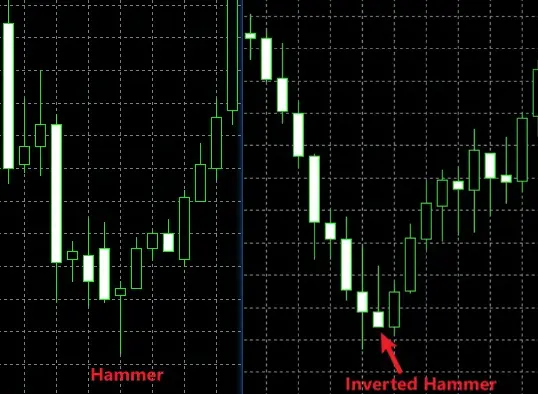
In this guide, you’ll learn:
How to trade them correctly
The difference between Hammer and Inverted Hammer
Why both are bullish at support
What Is a Hammer Candlestick?
A Hammer is a bullish reversal candlestick that forms after a downtrend.
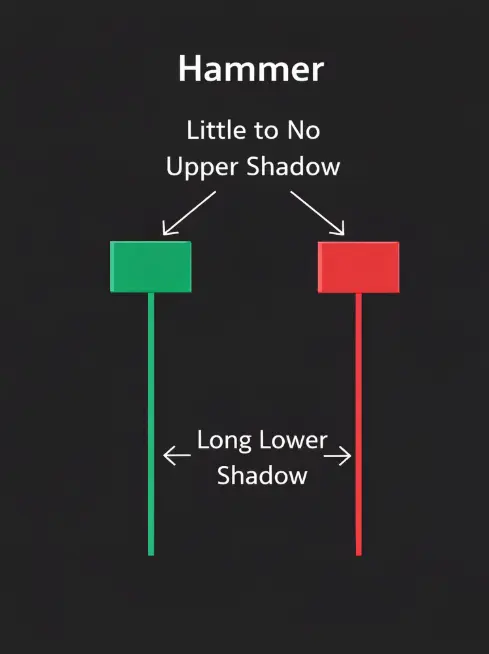
Key Characteristics
- Long lower shadow
- Small body near the top
- Little to no upper shadow
It shows strong rejection of lower prices
What Is an Inverted Hammer?
An Inverted Hammer also signals a potential bullish reversal, but its structure is different.
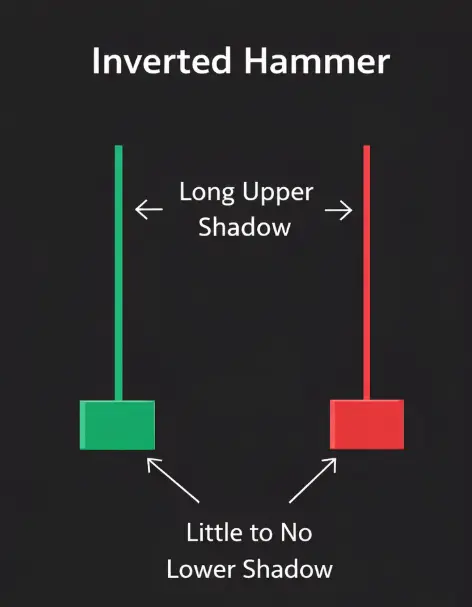
Key Characteristics:
- Long upper shadow
- Small body near the bottom
- Little to no lower shadow
It shows buyers attempted to push price higher
Key Difference (Important)
- Hammer → Rejection from below
- Inverted Hammer → Attempt to move higher
Both suggest buyers are entering the market
The Most Important Rule: SUPPORT
Both patterns are only valid when they form at a support level.
Hammer at Support (Bullish Signal)
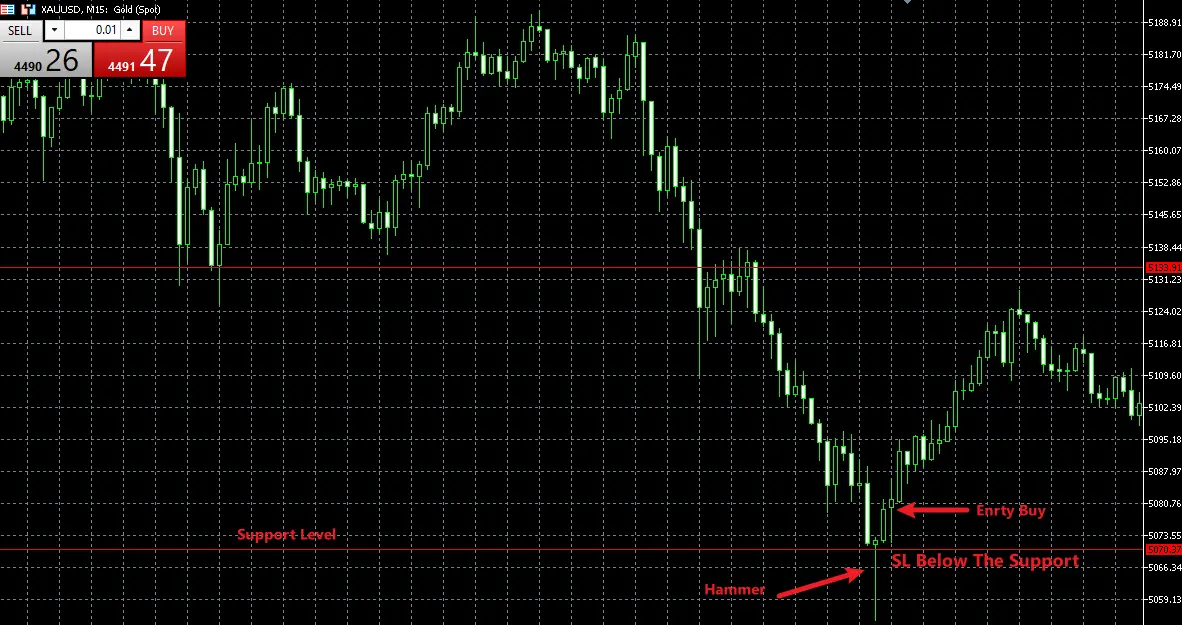
When a Hammer forms at support:
- Sellers push price down
- Buyers strongly reject lower levels
- Price closes near the top
This is a strong buy signal
Inverted Hammer at Support (Early Bullish Signal)
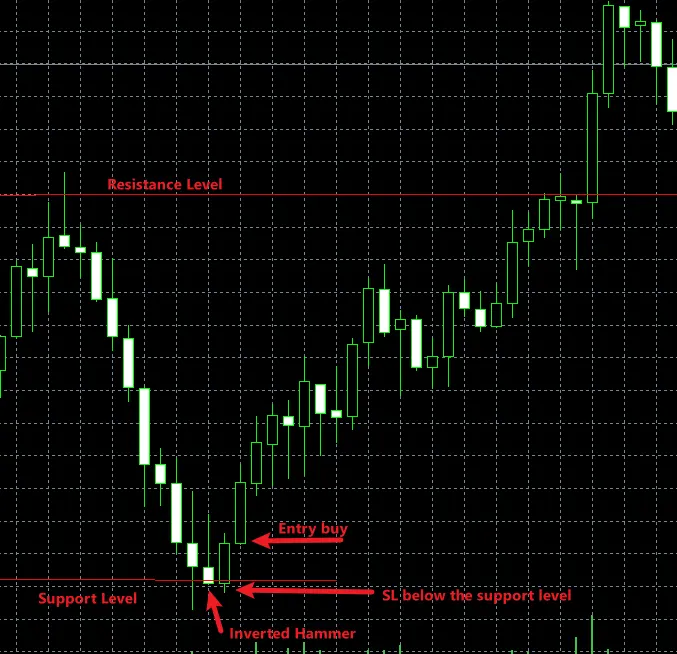
When an Inverted Hammer forms at support:
- Buyers try to push price higher
- Sellers push it back slightly
- But buying pressure is visible
This is a weaker but early bullish signal
Confirmation is REQUIRED
How to Trade Both Patterns
Step 1: Identify Support
- Previous lows
- Demand zones
- Strong key levels
Step 2: Wait for the Pattern
- Hammer OR Inverted Hammer
Step 3: Wait for Confirmation
For Hammer:
- Next candle bullish OR break of high
For Inverted Hammer:
- MUST wait for bullish confirmation
- Strong bullish candle preferred
Entry, Stop Loss, Take Profit
Entry:
- Break of pattern high
Stop Loss:
- Below the low of the candle
Take Profit:
- Next resistance level
- Risk minimum 1:2
Common Mistakes
- Trading these patterns in the middle of the chart
- Ignoring support levels
- Entering without confirmation
- Confusing Inverted Hammer with Shooting Star
Pro Tips
- Hammer = stronger signal
- Inverted Hammer = early signal
- Always combine with support
- Use higher timeframes for better accuracy
Final Summary
Both the Hammer and Inverted Hammer are bullish reversal patterns.
But only when used correctly:
- At support
- With confirmation
- With proper risk management
Master the location, not just the pattern.
Looking for bearish reversal setups?
Check out: Shooting Star & Hanging Man Strategy
Learn all Doji types here: Doji Candlestick Types Guide
About the Author
David William – Professional Forex & Crypto Trader
More trading insights at trading-strategy-hub.com
Disclaimer: This analysis is for educational purposes only and does not constitute financial advice.