
Trading the Dragonfly Doji is not about reacting instantly — it’s about understanding the story behind the candle.
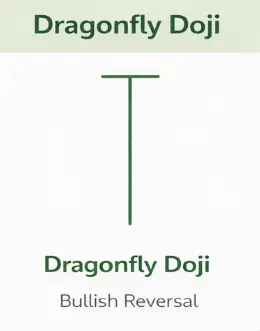
Step 1: Focus on Location
The Dragonfly Doji only becomes meaningful when it forms at a key support level.
This includes:
- Previous swing lows
- Strong demand zones
- Psychological price levels
Without support, the pattern has little to no value.
Step 2: Read the Market Reaction
A valid Dragonfly Doji shows clear rejection of lower prices.
Ask yourself:
- Did price strongly bounce from the low?
- Are buyers stepping in aggressively?
The longer the lower wick, the stronger the rejection.
Step 3: Wait for Confirmation
This is where most traders fail.
A Dragonfly Doji alone is NOT a buy signal.
Enter only when:
- The next candle closes bullish
OR - Price breaks above the high of the Doji
Confirmation separates amateurs from professionals.
Trade Execution (Entry, Stop Loss, Take Profit)
Entry:
Enter on a break above the Doji high, confirming bullish momentum.
Stop Loss:
Place your stop below the lowest point of the wick, where the rejection started.
Take Profit:
Target the next resistance level or aim for a minimum risk-to-reward ratio of 1:2.
Key Insight
The Dragonfly Doji is not just a pattern — it is a story of rejection and control shift.
Sellers lose control
Buyers step in
The market prepares to move higher
Trade the story, not just the candle.
Learn bearish rejection here: Gravestone Doji Strategy
Learn all Doji types here: Doji Candlestick Types Guide
Explore Doji Candlestick Types
- Standard Doji – Basic indecision pattern
- Gravestone Doji – Bearish reversal at resistance
- Dragonfly Doji – Bullish reversal at support
- Long-Legged Doji – High volatility and indecision
Learn all Doji candlestick types → Doji Candlestick Types Guide
About the Author
David William – Professional Forex & Crypto Trader
More trading insights at trading-strategy-hub.com
Disclaimer: This analysis is for educational purposes only and does not constitute financial advice.