
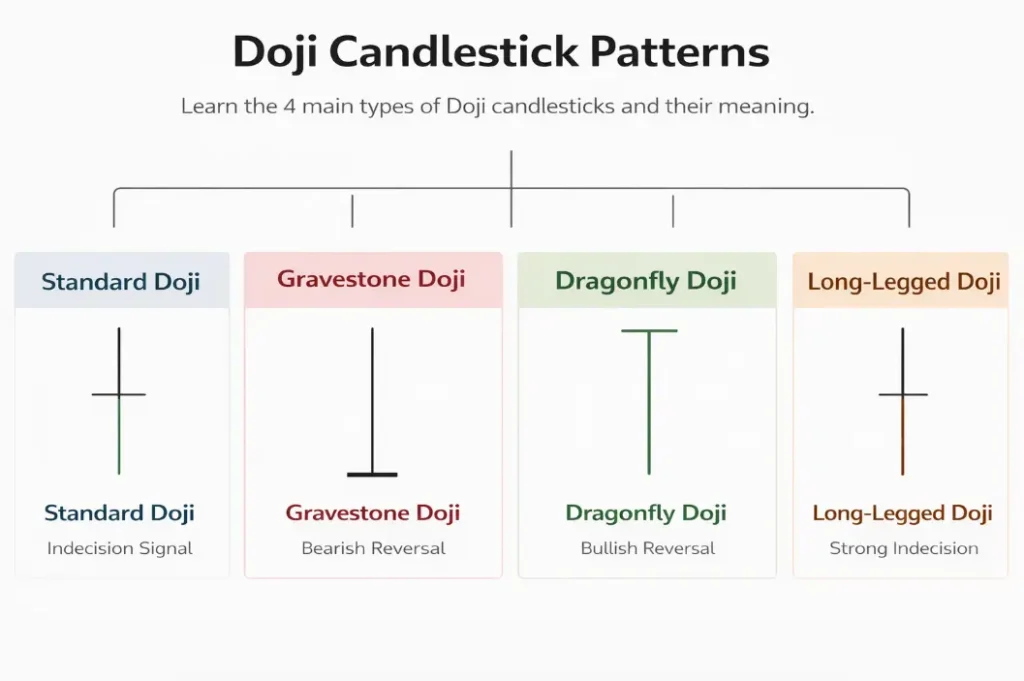
The Doji candlestick is one of the most important patterns in price action trading. It does not signal direction directly—but it reveals something even more valuable:
Market indecision
In this guide, you’ll learn:
- The different types of Doji candlesticks
- What each type means
- How to trade them correctly
- Why context is more important than the pattern itself
What Is a Doji Candlestick?
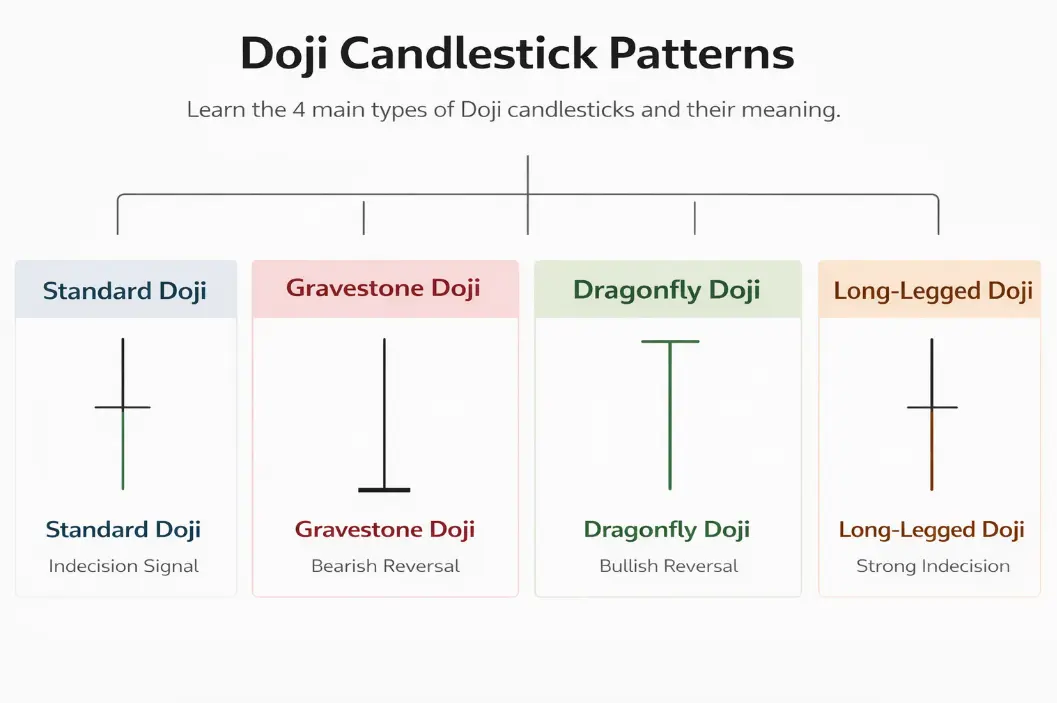
A Doji forms when the open and close prices are nearly the same, creating a very small body.
Key Characteristics:
- Small or no real body
- Upper and/or lower shadows
- Signals balance between buyers and sellers
A Doji reflects uncertainty in the market
Why Doji Matters
A Doji often appears when:
- A trend is losing momentum
- Buyers and sellers are in balance
- A potential reversal may occur
But remember:
A Doji is NOT a confirmation signal
Types of Doji Candlestick Patterns
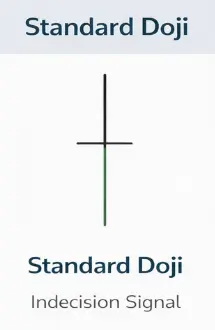
1. Standard Doji
Structure:
- Small body
- Upper and lower shadows are relatively equal
Meaning:
- Market indecision
- No clear control from buyers or sellers
Common in sideways markets
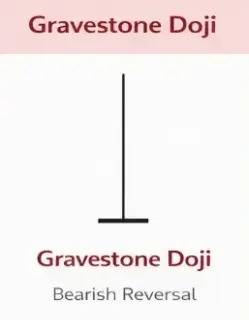
2. Gravestone Doji
Structure:
- Long upper shadow
- Little to no lower shadow
Meaning:
- Strong rejection of higher prices
- Sellers push price back down
Often signals a bearish reversal at resistance
3. Dragonfly Doji
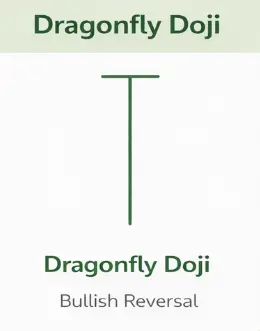
Structure:
- Long lower shadow
- Little to no upper shadow
Meaning:
- Strong rejection of lower prices
- Buyers push price back up
Often signals a bullish reversal at support
4. Long-Legged Doji
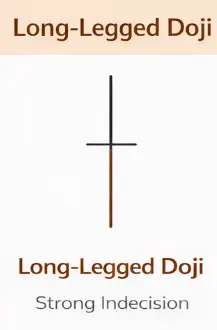
Structure:
- Long upper and lower shadows
- Small body in the center
Meaning:
- High volatility
- Strong indecision
Market is unstable and uncertain
The Most Important Rule: CONTEXT
A Doji alone means nothing.
It only becomes useful when it appears at:
- Support → potential bullish reversal
- Resistance → potential bearish reversal
Common Mistakes
- Treating Doji as a standalone signal
- Ignoring support/resistance
- Entering without confirmation
- Trading in choppy markets
Pro Tips
- Doji works best after strong trends
- Combine with key levels for higher accuracy
- Longer wicks = stronger rejection
- Imperfect Doji are still valid
Doji vs Other Candlestick Patterns
- Doji → indecision
- Hammer → bullish rejection
- Shooting Star → bearish rejection
Doji requires confirmation, others are stronger signals
Final Summary
Doji candlesticks are powerful—but only when used correctly.
Key Takeaways:
- Doji = indecision
- Different types show different bias
- Must be used with support/resistance
- Always wait for confirmation
Don’t trade the pattern. Trade the context behind it.
Explore more candlestick setups:
Bullish → Hammer & Inverted Hammer
Bearish → Shooting Star & Hanging Man
Explore Doji Candlestick Types
- Standard Doji – Basic indecision pattern
- Gravestone Doji – Bearish reversal at resistance
- Dragonfly Doji – Bullish reversal at support
- Long-Legged Doji – High volatility and indecision
About the Author
David William – Professional Forex & Crypto Trader
More trading insights at trading-strategy-hub.com
Disclaimer: This analysis is for educational purposes only and does not constitute financial advice.